Lapis lazuli · Origin
Afghan lapis lazuli from Badakhshan
For thousands of years, the finest lapis lazuli has come from the mountains of Badakhshan in north-eastern Afghanistan. This is where our lapis comes from.
Sar-e-Sang and the Kokcha valley
The historic lapis deposits lie around Sar-e-Sang in the Kokcha river valley, high in the Hindu Kush in Badakhshan province. The mines sit in remote, steep terrain, and much of the work is still done on a small scale.
Lapis lazuli is a rock made mainly of the blue mineral lazurite, together with white calcite and golden pyrite. The balance of these three gives each piece its character.
What sets Afghan lapis apart
Fine Afghan lapis is known for a deep, saturated blue, often with a slight violet tint, and for fine, evenly spread pyrite. Lapis from other sources, such as Chile, often contains more calcite and has a lighter, greyer blue. Within Badakhshan, quality still ranges widely, from top colour to heavily veined material, which is why we grade every lot.
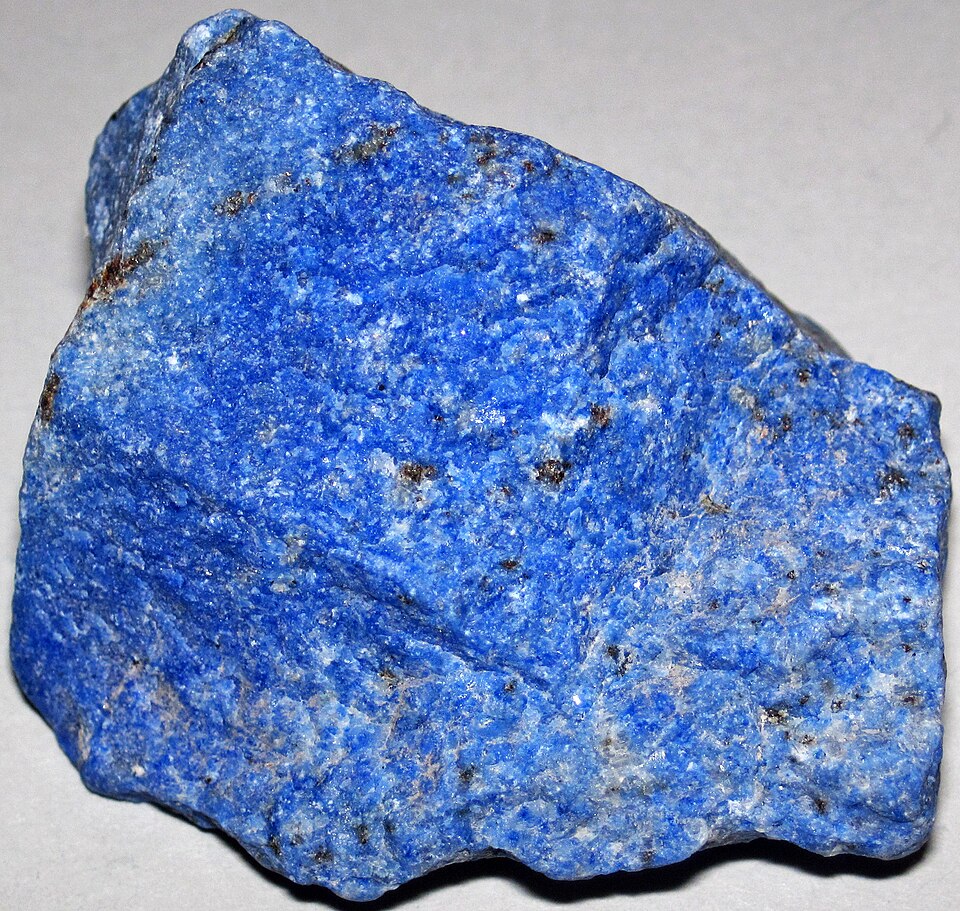
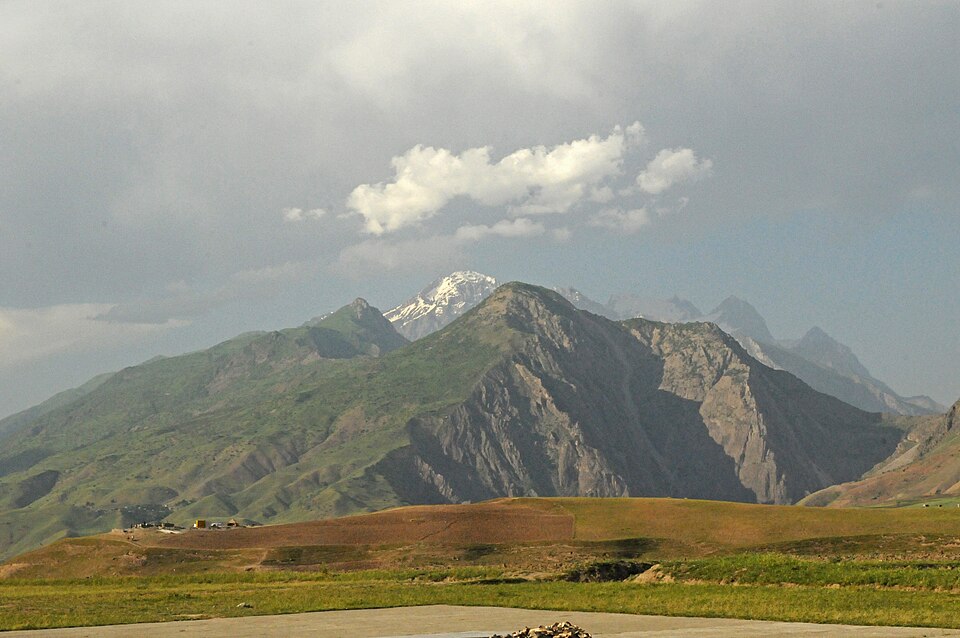
Sar-e-Sang, Badakhshan · ≈ 36.2° N, 70.8° E
Six thousand years of history
Lapis from Badakhshan travelled the ancient trade routes to Mesopotamia and Egypt, where it was used in royal jewellery and objects. Much later, ground lapis became ultramarine, the most precious blue pigment of medieval and Renaissance painting. Some of the earliest known uses of ultramarine are in cave paintings at Bamiyan, also in Afghanistan.
Not Panjshir lapis
Online, Afghan lapis is sometimes wrongly called “Panjshir lapis”. The Panjshir valley is known for emerald; lapis lazuli comes from Badakhshan. We name each stone by its documented region.
How we document origin
For every lot we state the region of origin and which supplier documents support it. Where we cannot document a route well enough, we do not buy. Read the full approach on our Origin & Transparency page, and meet the people behind Kohvand in our story.
What we supply
- Rough lapis lazuli for carving and cutting
- Blocks and slabs
- Calibrated cabochons for production
- Beads and special sizes on request
FAQ
Is all lapis lazuli from Afghanistan?
No. Lapis is also found in Chile, Russia and a few other places, but Badakhshan in Afghanistan is the classic and most important source.
How can I tell Afghan lapis from other origins?
Colour and the pattern of calcite and pyrite give clues, but they are not proof. Origin is supported by supplier documents and, where needed, laboratory testing.
Do you sell Afghan lapis wholesale?
Yes. We supply rough, blocks, slabs, cabochons and beads to jewellers, carvers and wholesalers. Ask for the current list via WhatsApp or the quote form.
Guides for lapis buyers
All guides →Lapis lazuli price: per carat, per gram and per kilo
What determines the price of lapis lazuli: colour, calcite, pyrite, treatment and form. How rough, blocks, slabs, beads and cabochons are priced.
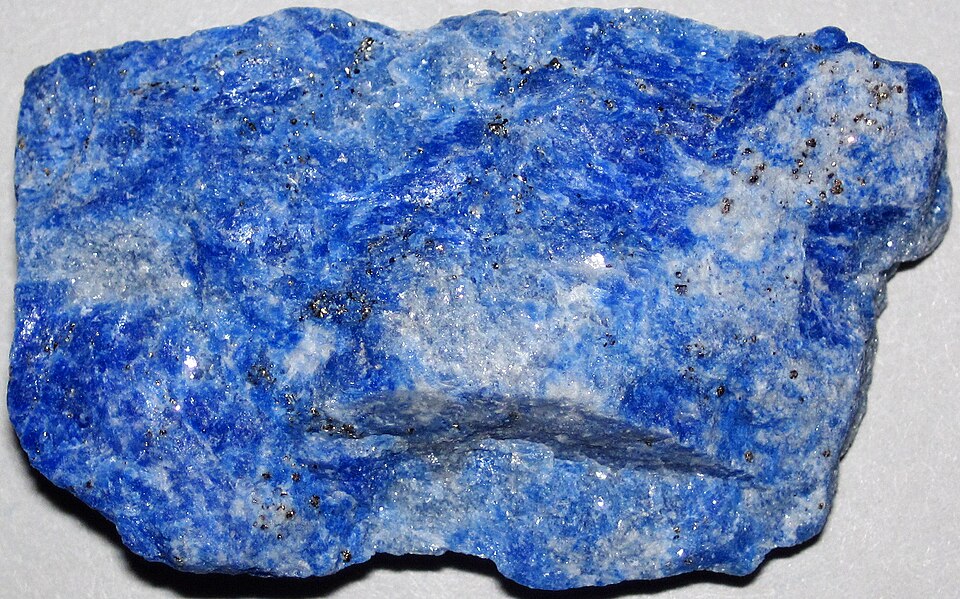
Is your lapis lazuli real?
How to tell natural lapis lazuli from dyed howlite or jasper, sodalite, reconstituted lapis and other imitations. Simple checks and their limits.
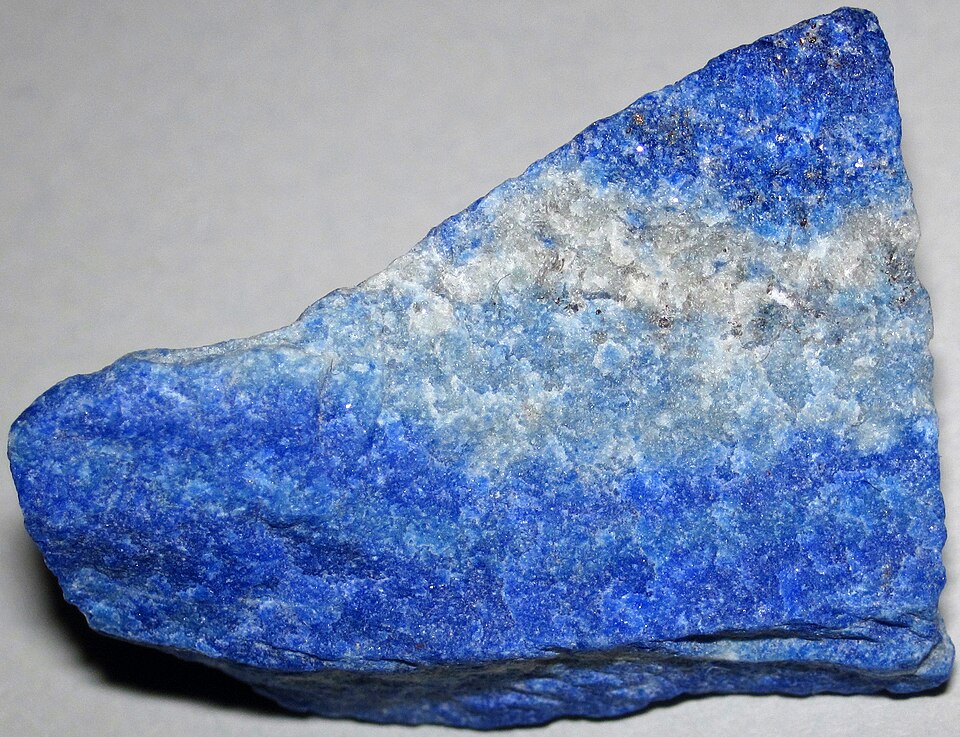
Lapis lazuli grades: colour, calcite and pyrite
How lapis lazuli is graded in the trade: colour, calcite, pyrite, compactness and treatment, and why letter grades like AAA mean little without a description.
Looking for a particular stone?
Tell us what you need. The quickest way is WhatsApp; the quote form works too.