In short
- Rough, blocks and slabs are usually priced per kilo or per gram.
- Fine cabochons are priced per carat or per piece; beads per strand.
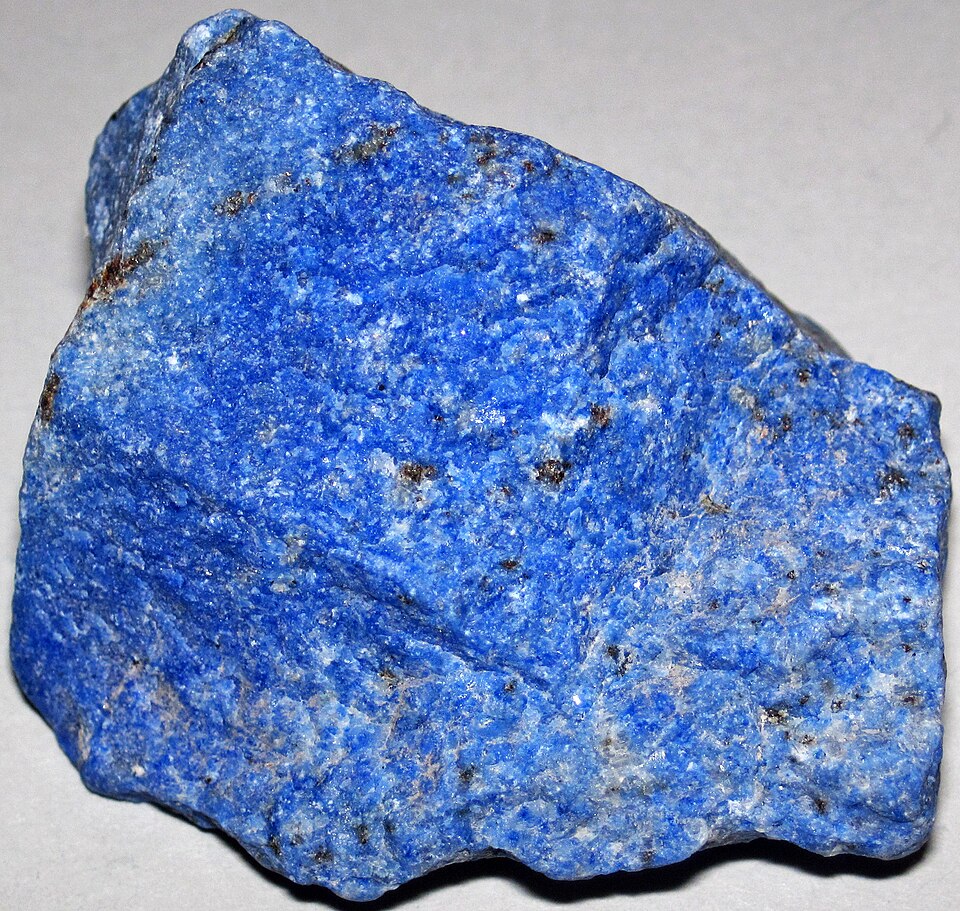
- Deep, even blue with little calcite is worth the most.
- Dyed, waxed or reconstituted material must be disclosed and is priced far lower.
How lapis lazuli is priced by form
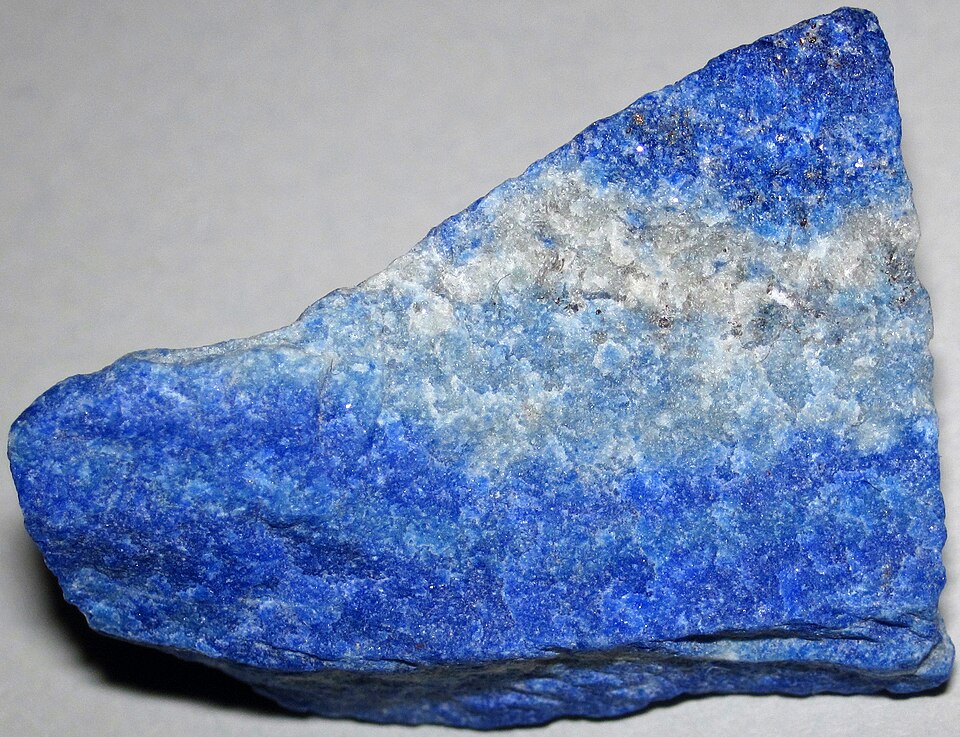
- Rough and blocks: per kilo or per gram, depending on quality. Larger, compact blocks without cracks are worth more per kilo, because they yield more usable material for carving or cutting.
- Slabs: per piece or per gram, depending on thickness and the share of clean blue.
- Cabochons: fine stones per carat, calibrated production sizes per piece.
- Beads: per strand, depending on bead size, colour and whether the material is natural or dyed.
Always check the unit before comparing offers: a low price per gram can be a high price per usable piece if much of the material is calcite.
What makes lapis lazuli valuable
Colour
The most valuable lapis has a deep, saturated blue, sometimes with a slight violet tint, spread evenly across the stone. Lighter and patchy blues are worth less.
Calcite
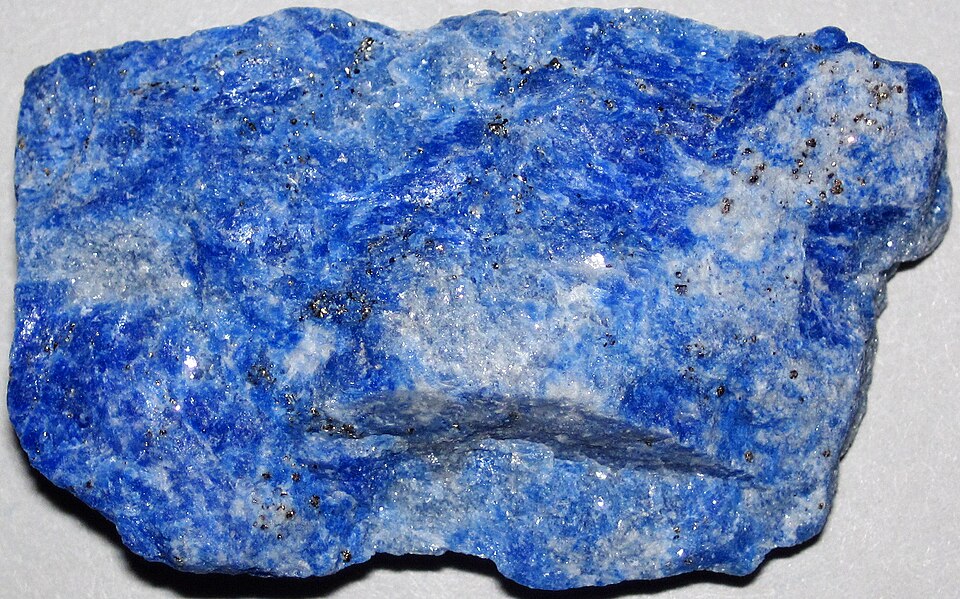
White calcite appears as veins, clouds or patches. The less calcite, the higher the grade. Heavy calcite gives a greyish, lighter look and lowers the price significantly.
Pyrite
Fine, evenly spread golden flecks of pyrite are appreciated and part of the classic look of Afghan lapis. Heavy pyrite can suit some designs, but large pyrite patches can tarnish and lower the value for fine jewellery.
Treatment
Lapis is sometimes dyed to deepen the blue, waxed or oiled to improve lustre, or stabilised with resin. Reconstituted lapis is made from powder bound with resin. All of these must be disclosed. Natural, untreated material of good colour is priced well above treated material. See how to tell if lapis lazuli is real.
Origin
Afghan lapis from Badakhshan has been the reference for thousands of years. Other sources exist, for example Chile and Russia, and their material often looks different. Origin only adds value when it is documented. Read more about Afghan lapis lazuli from Badakhshan.
Trade grades: AAA, AA, A
Many sellers use letter grades. Be careful: there is no universal standard, and one seller's AAA can be another's A. Ask for a description instead: colour, calcite, pyrite and treatment, and look at photos taken in daylight. Our guide to lapis lazuli grades explains what to look for.
How Kohvand prices lapis
We quote per lot or per piece, in writing, with photos, weight, dimensions and what we know about treatment and origin. Tell us the form, size and quantity you need via our quote form, or browse our Afghan lapis lazuli. Trade terms for carvers, jewellers and wholesalers are on our page for professionals.