In short
- Common imitations: dyed howlite, magnesite or jasper, sodalite, reconstituted lapis and glass.
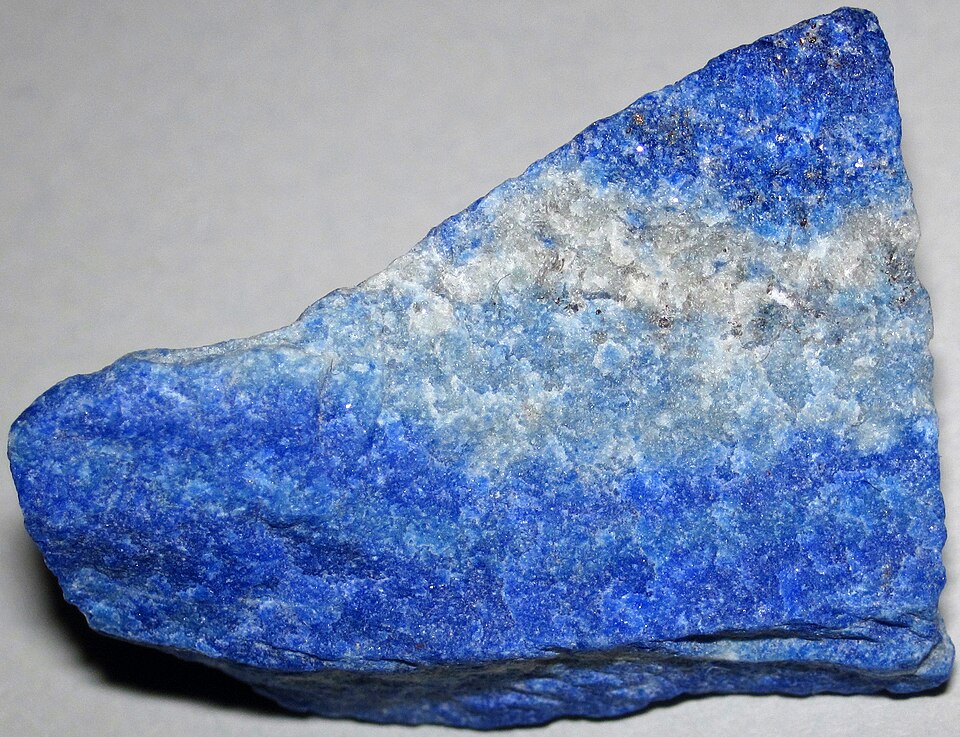
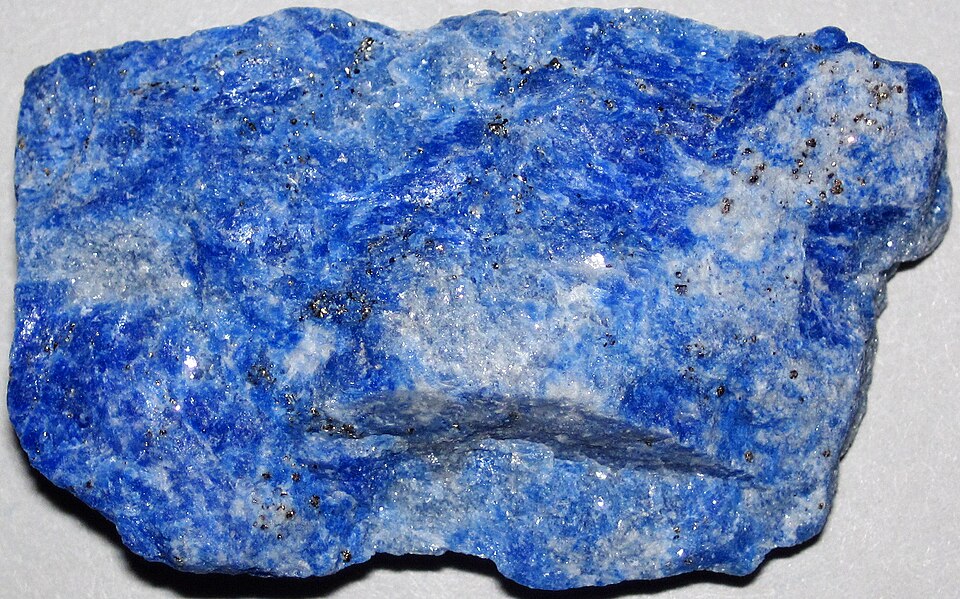
- Natural Afghan lapis usually shows white calcite and fine golden pyrite.
- Dye can show in cracks and pits, and may rub off on a cotton swab with acetone.
- A gemmological laboratory can confirm identity and treatment.
Common imitations
- Dyed howlite or magnesite: white stones dyed blue. The colour is often too uniform, and dye collects in cracks and pits.
- Dyed jasper (sometimes sold as “Swiss lapis” or “German lapis”): a different stone, dyed blue. The trade names are misleading.
- Sodalite: a natural blue stone that is often confused with lapis. It is usually darker, with white or grey veins, and rarely shows pyrite.
- Reconstituted lapis: lapis powder or other material bound with resin. It can look very even and may show a granular structure under magnification.
- Glass and ceramics: sometimes with added metallic flecks imitating pyrite.
What natural lapis lazuli looks like
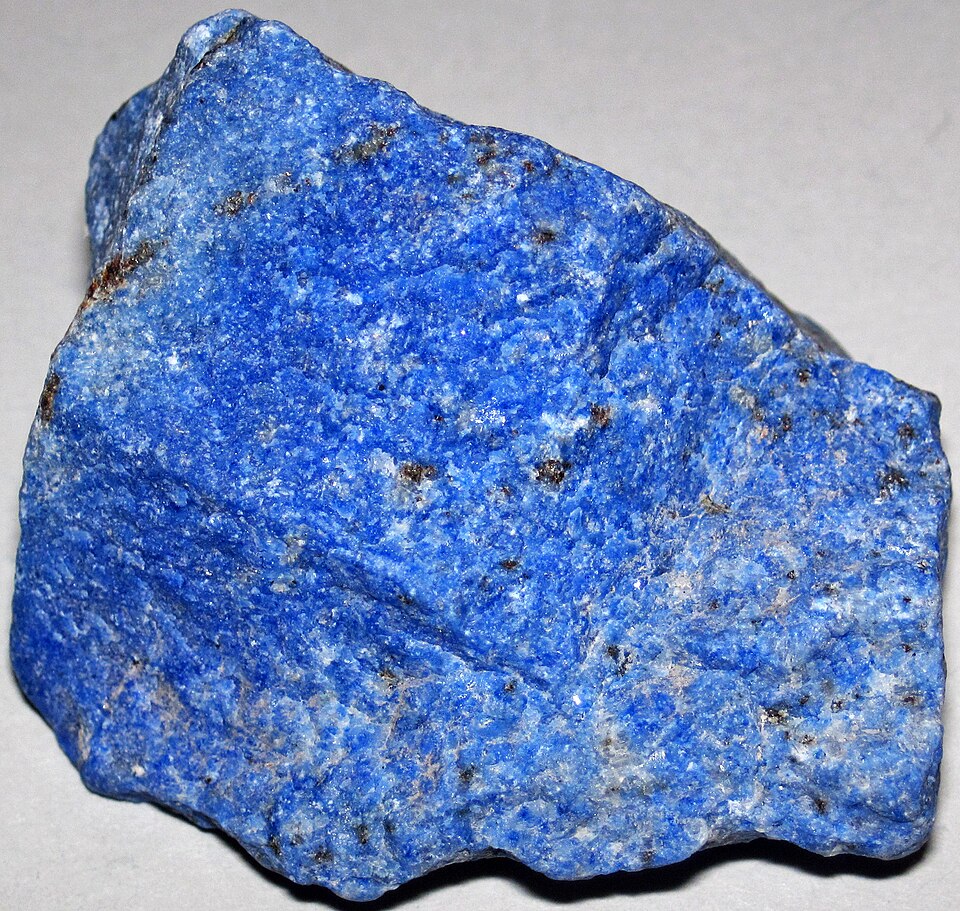
Lapis lazuli is a rock, not a single mineral. Its blue comes mainly from lazurite, usually mixed with white calcite and golden pyrite. Natural lapis from Badakhshan typically shows a deep blue with fine pyrite flecks and some calcite. Perfectly uniform colour without any calcite or pyrite is possible in the finest material, but in an inexpensive piece it deserves a second look.
Simple checks
- Look at cracks and drill holes: concentrated blue colour in cracks or around bead holes points to dye.
- Acetone swab: rub a cotton swab with acetone on an inconspicuous spot. Blue colour on the swab indicates dye. Do this only on your own stone and on a hidden spot, as it can damage wax or polish.
- Pyrite: real pyrite flecks are irregular, metallic and brassy. Glitter that looks evenly sprinkled is suspicious.
- Price: fine natural lapis is not cheap. Very low prices for deep blue material usually mean dye or reconstituted material.
These checks can expose many imitations, but they cannot prove that a stone is natural and untreated. For valuable pieces and larger lots, ask for laboratory testing.
Treatments that must be disclosed
Natural lapis can still be treated: dyed to deepen the colour, waxed or oiled to improve lustre, or stabilised with resin. Treated lapis is not fake, but it is worth less and must be disclosed. Read more in our lapis lazuli price guide.
How Kohvand handles this
For every lot we state what is known about treatment and how we know it. We never sell reconstituted material as natural lapis. Where needed, a laboratory can test material before shipment. Browse our Afghan lapis lazuli or read about lapis from Badakhshan.